Dubai’s real estate market has experienced remarkable growth over the past few years.
Prices have risen, transaction volumes have remained strong, and developers continue to launch new residential communities across the emirate.
But this naturally raises an important question:
IS DUBAI BUILDING TOO MANY PROPERTIES?
With a significant pipeline of new homes expected to enter the market, concerns about oversupply are becoming increasingly relevant for investors.
However, the answer isn’t as simple as looking at the number of new units being delivered.
The more important question is:
Can Dubai’s growing population, economy and investor demand absorb the incoming supply?
DUBAI IS ENTERING A MAJOR NEW SUPPLY CYCLE
One of the biggest factors investors need to watch is the volume of residential properties scheduled for completion.
Dubai has a substantial pipeline of apartments and villas under construction, with many projects expected to reach completion over the coming years.
That doesn’t automatically mean the market is heading for a crash.
Supply can be absorbed when it is supported by:
- Population growth
- Job creation
- Foreign investment
- Tourism
- Household formation
- Strong rental demand
- Continued economic expansion
The issue is therefore not simply how much supply is coming, but where it is coming and what type of demand exists for it.
OVERSUPPLY COULD AFFECT SOME AREAS MORE THAN OTHERS
Dubai is not one single property market.
Each community has different levels of supply, demand, infrastructure, rental activity and buyer demographics.
An area with hundreds of competing units launching at similar prices may experience greater pressure than a well-established community with limited new inventory and strong end-user demand.
This means investors should avoid making broad assumptions about the entire Dubai market.
Instead, evaluate the specific community and property type.
RENTAL DEMAND WILL BE ONE OF THE BIGGEST INDICATORS
Rental demand is particularly important as new properties enter the market.
If population growth continues to generate new households, additional supply can help meet that demand.
But if new supply grows faster than the number of tenants entering the market, landlords could face:
- Greater competition
- Longer vacancy periods
- Pressure on rents
- Higher incentives for tenants
Investors should therefore look beyond advertised rental yields.
Ask:
Who is actually going to rent this property?
A projected yield means little if the property struggles to attract tenants at the expected rent.
LOCATION COULD MATTER MORE THAN EVER
As supply increases, location becomes even more important.
Properties with strong connectivity, established amenities and proximity to employment centres may have greater resilience than properties competing primarily on price.
Investors should consider:
- Metro and road connectivity
- Schools and healthcare
- Retail and lifestyle amenities
- Employment hubs
- Tourism attractions
- Future infrastructure
- Existing rental demand
The quality of the surrounding community can ultimately influence both tenant demand and resale liquidity.
DEVELOPER REPUTATION WILL ALSO MATTER
A market with abundant supply gives buyers more choice.
That can make developer reputation increasingly important.
When buyers can choose between multiple projects, factors such as construction quality, delivery track record, community planning and after-sales service can influence which properties retain demand.
This is particularly relevant in the off-plan market.
Investors should not assume that every new launch will perform equally simply because it is located in Dubai.
COULD MORE SUPPLY ACTUALLY BE GOOD FOR DUBAI?
Yes.
More supply isn’t necessarily a negative.
Dubai’s population and economy have expanded significantly, and additional housing is necessary to accommodate future residents.
New supply can also create:
- More housing options
- Greater choice for buyers
- New communities
- Improved infrastructure
- More competitive pricing
- Better-quality residential products
The problem occurs when supply consistently outpaces sustainable demand in a particular segment or location.
That’s why investors should distinguish between healthy market growth and localized oversupply.
WHAT SHOULD INVESTORS WATCH IN 2026?
Rather than trying to predict whether Dubai will experience a market-wide oversupply, investors should monitor several indicators.
1. New handovers
Track how many units are actually being completed—not just announced.
2. Population growth
Continued population growth can provide an important demand base for new housing.
3. Rental performance
Watch rents, occupancy and tenant incentives in individual communities.
4. Transaction volumes
Strong transaction activity can indicate continued buyer demand, although volume alone doesn’t guarantee future price growth.
5. Resale activity
A healthy secondary market is important for investors who may want to exit before or after handover.
6. Developer payment plans
Longer and more flexible payment plans can influence buyer demand and resale liquidity, particularly in the off-plan market.
WHAT DOES THIS MEAN FOR INVESTORS?
The possibility of increased supply doesn’t mean investors should avoid Dubai.
It means property selection becomes more important.
Instead of asking:
“Is Dubai oversupplied?”
A better question is:
“Which properties are most likely to remain in demand as supply increases?”
That requires looking at the fundamentals.
A property in a strategically located community, developed by a reputable developer, with strong end-user demand and sensible pricing may remain attractive even in a market with significant new supply.
On the other hand, properties that rely heavily on short-term speculation or unrealistic rental assumptions may face greater pressure.
 WHAT ABOUT PREMIUM DEVELOPMENTS?
Premium developments can have a different demand profile, but investors shouldn’t assume that luxury automatically protects an investment from oversupply.
The same principles still apply:
Location. Developer. Pricing. Demand. Supply. Exit strategy.
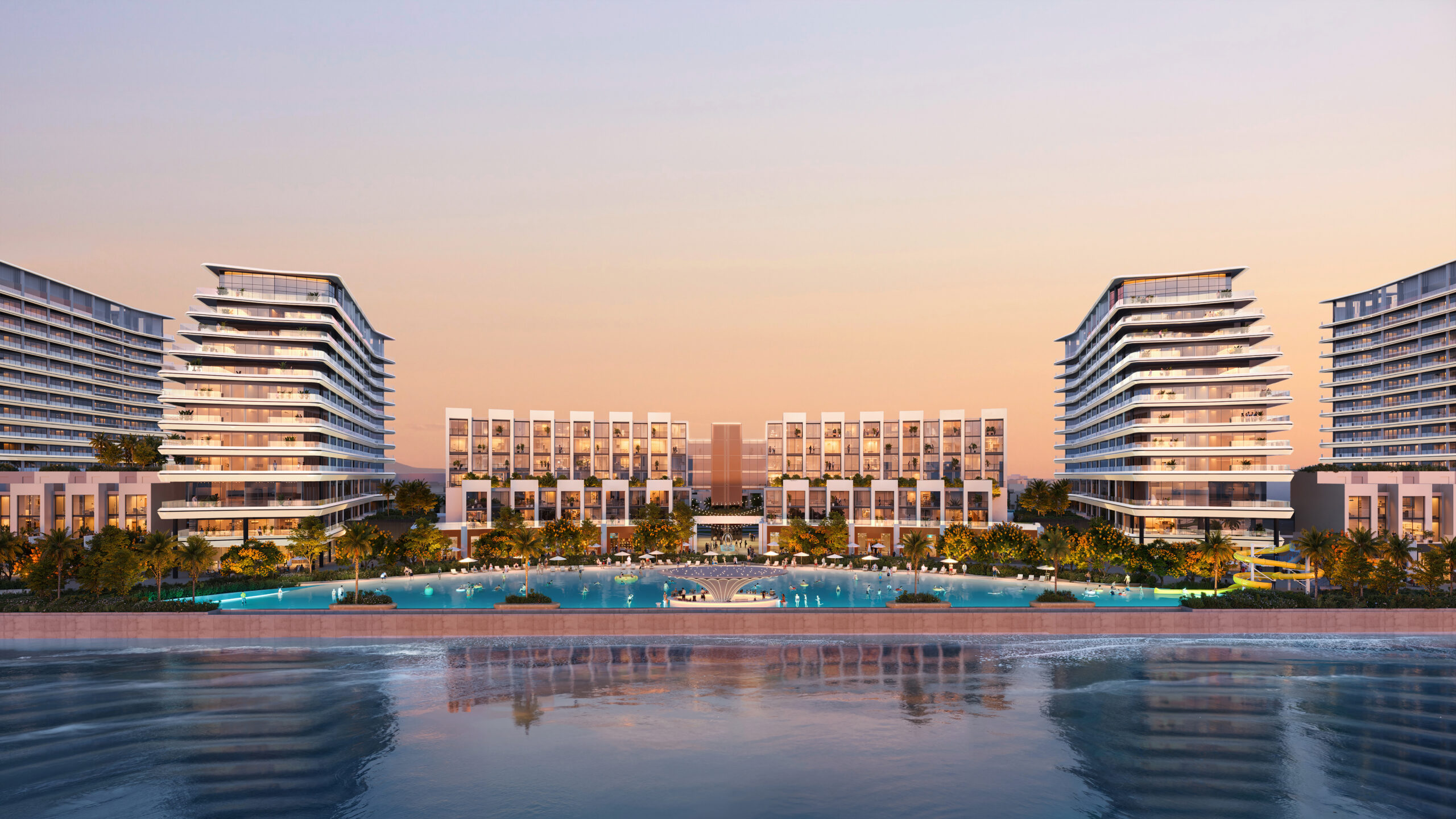
For example, investors evaluating developments such as Sobha Central, Sobha Sanctuary, or other premium master-planned communities should look beyond the project’s branding and assess the surrounding supply pipeline, target buyer profile, payment structure and expected demand.
The objective is to identify properties with genuine long-term fundamentals rather than simply buying into the latest launch.
IS DUBAI HEADING TOWARDS A PROPERTY OVERSUPPLY?
A market-wide oversupply is not a conclusion investors should make simply because a large number of new homes are being delivered.
Dubai has demonstrated strong demand drivers, but the increasing volume of new supply means investors need to become more selective.
The next phase of Dubai real estate may therefore be less about simply being in the market and more about being in the right part of the market.
For investors, that means paying closer attention to:
- Community-level supply
- Rental demand
- Population growth
- Developer quality
- Entry pricing
- Infrastructure
- Resale liquidity
FINAL THOUGHTS
Dubai’s property market is entering an important period.
More homes are coming. More communities are being developed. And buyers are gaining more choice.
That doesn’t necessarily signal a market correction.
But it does mean the days of assuming that almost any Dubai property will appreciate simply because the market is rising may become less reliable.
As supply increases, fundamentals matter more.
The investors who understand where demand is strongest—and choose properties accordingly—are likely to be better positioned for the next phase of Dubai’s real estate market.
At The Ark Real Estate, we help local and international investors evaluate Dubai and wider UAE property opportunities based on location, pricing, payment plans, demand and long-term investment objectives.
The question isn’t whether Dubai has too many properties. It’s whether you’re investing in the properties that will remain in demand.